What Is Anticipatory Grief: According to An Expert
 by Christy Caplan
|
October 15, 2025
by Christy Caplan
|
October 15, 2025 Walter is 13 years young. I’ve lived with him since he was 8 weeks old, and I know what he’s thinking with just a look or a sigh. My doxie, Bruisy, passed away at 14 and my Beagle mix passed away at 16 a few years ago. So the oldest dog I’ve ever lived with was 16.
I feel like I have an intimate relationship with anticipatory grief. Walter has many issues and Irritable Bowel Disease (IBD) is what we manage daily with a lot of medication. He has mostly great days and today we started with entyce, an appetite stimulant, as his appetite wasn’t great. I want every day to be a GREAT day for Wally now that he’s a senior. I used to think using an appetite stimulant was for a very sick dog or a ‘big gun’ but now it’s a tool I use to make sure important medication is taken and food is fun.
Walter, thank goodness, looks bright and happy. He wants to be here and loves his daily routine. I know he’ll tell me when that changes, and I’ll respect that, but I can’t help occasionally thinking we are in that precious phase where we manage illness and cross items off the bucket list. Most days are wonderful but some days I feel sad. Never in front of Walter, of course.
I spoke with Michelle Nichols, an Animal Hospice Coach and Educator who helps families navigate their pets’ final chapter with comfort, dignity, and peace. Through the AHELP Project, she provides caregiver coaching, professional education, and compassionate resources for pet parents and veterinary teams alike. I asked her some questions to help clarify this important topic.
Anticipatory Grief Q&A with expert Michelle Nichols
Q1. What is Anticipatory Grief in the context of animal hospice and end-of-life care for dogs?
Animal hospice is not a physical location, but a philosophy of care that prioritizes comfort, dignity, and presence over a cure for the pet patient. As families prepare for goodbye, one of the most tender—and often misunderstood—aspects of the journey is anticipatory grief: the sadness you feel when your beloved dog is still alive and you know their time is limited. You begin to anticipate their loss. These emotions—sadness, fear, guilt, and even profound love—are a valid part of hospice care. Naming and honoring them transforms this time into what I call “the gift of hospice”: a sacred window to connect, create memories, and begin the healing process. 💝
Q2. What are the common signs of anticipatory grief in pet owners, and how can they recognize these emotions early?
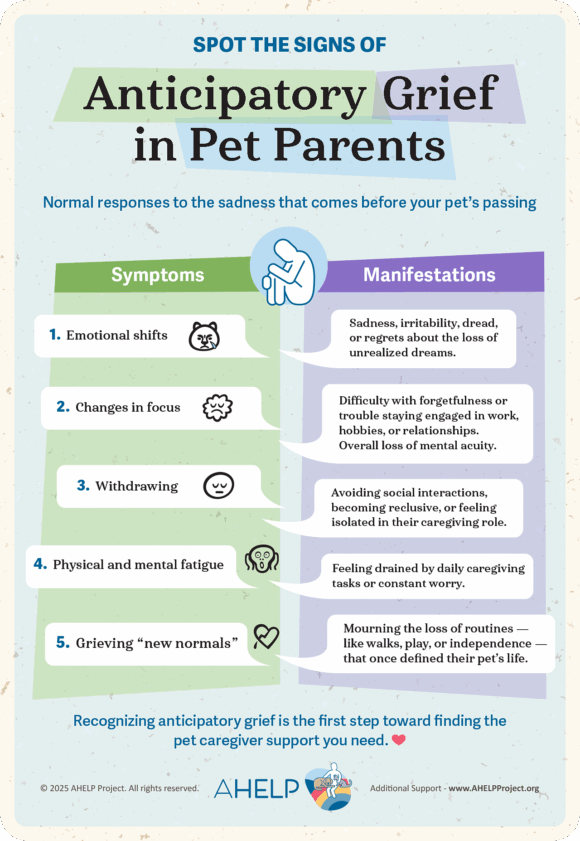
The first step to coping with anticipatory grief is simply noticing the changes in yourself. Many families are surprised to feel sadness, guilt, or exhaustion long before their pet’s final days, and without the correct language, these emotions can feel confusing or isolating. Please refer to Figure 1 below: Recognizing Your Anticipatory Grief for common symptoms and manifestations.
Common signs include:
- Sadness, irritability, or guilt about the future
- Trouble focusing or forgetting daily tasks
- Withdrawing from friends or activities
- Feeling drained from constant caregiving
- Mourning routines your pet can no longer enjoy
As routines shift and “new normals” emerge, this grief can deepen—but it also offers an opportunity to connect more fully during this sacred time. I often share Rosie’s Story with pet parents to give them a better appreciation of what we mean by this.
By naming what you’re feeling, you begin to understand that these responses are normal—and that recognizing them early can help you stay present and compassionate during your pet’s final chapter.
Rosie’s Story: Understanding “New Normals”
Rosie was a 15-year-old Golden Retriever who had once thrived on long walks and outings. As she aged and developed doggy dementia, her world—and her family’s routines—began to shrink. Long walks turned into short yard visits, and precious time was spent making warm, home-cooked meals to replace her convenient kibble. Restless nights became the new rhythm of their lives.
Each small shift was a “new normal”—and with each one, Rosie’s family felt a quiet grief for the life they were slowly leaving behind.
Q3. What strategies or coping mechanisms do you recommend for pet owners preparing for the loss of a beloved dog? Is this where hospice can play a role?
Yes—this is where pet hospice truly shines. Incorporating caregiver support, families gain time to plan, reflect, and prepare for the future. While death is unpredictable, creating an end-of-life plan helps you look back knowing you followed your Path of Least Regrets, easing guilt and allowing healing to occur naturally—and completely. Complete healing helps prevent unresolved grief that can resurface when caring for a future declining pet, fostering greater resilience and confidence for caregiving journeys still to come.
An interdisciplinary team provides the caregiver support that is at the core of hospice philosophy. Veterinarians lead medical care, while allied professionals—such as massage therapists, grief counselors, chaplains, and hospice coaches—add layers of physical, emotional, and spiritual support to help families cope and find peace as their beloved companion nears life’s end.
Q4. How can pet parents balance cherishing their remaining time with their dog while managing the emotional weight of impending loss?
Anticipating loss can feel heavy, but hospice offers the gift of time to be intentional. Speak from your heart, show love in everyday moments, and allow yourself to be fully present. Some options are as follows.
Bucket List Ideas to create joy without strain:
- Favorite outings or car rides (short and gentle if needed)
- Special treats or homemade meals that they love
- Quiet cuddle sessions in a favorite spot
- Ask a friend to help you or hire a professional for a photoshoot to capture memories and tender moments
Memorialization Ideas to prepare thoughtfully in advance:
- Paw prints according to your vision (try Veterinary Wisdom for a trusted source)
- Selecting an urn for cremains that reflects your pet’s spirit
- A remembrance keepsake, such as jewelry or art with cremains
- Creating a handmade scrapbook, a digital photo book, or a tribute video using online software to honor your pet’s life
By leaning into connection now and preparing memorials thoughtfully, you walk your Path of Least Regrets—reducing guilt later and allowing love to guide healing.
Q5. Are there specific ways to involve family members, including children, in the process of dealing with anticipatory grief for a dog? What about other pets in the household?
Yes—and early, honest conversations are a gift. Simple, age-appropriate explanations, avoiding euphemisms like “put to sleep”, can help kids feel less anxious and more prepared. Books about pet loss can naturally open discussions; see our recommended books for this purpose. Creative outlets, such as artwork, letters, or memory boxes, also provide children with a safe way to process their feelings, while teens may want to participate in caregiving or memorial projects.
Other pets grieve too—allow them access to their friend as decline progresses, and if death occurs at the clinic, bring them to smell their buddy so they know what happened. Flower essences like Pet Essences or Rescue Remedy for Pets may support healing and are safe, with no side effects or drug interactions. Before introducing any remedy or supplement, always consult your veterinarian.
AHELP-Recommended Reading: Pet Loss Grief Books for Children & Families
- Dog Heaven by Cynthia Rylant
A gentle, colorful picture book that helps children imagine a joyful afterlife for their beloved dog. - Cat Heaven by Cynthia Rylant
Companion to Dog Heaven, this book offers children comfort in picturing a peaceful resting place for their cat. - The Invisible Leash: An Invisible String Story About the Loss of a Pet by Patrice Karst
A reassuring story for children that highlights the enduring bond between them and their pet, even after the pet’s passing. - Old Pearl by Wendy Wahman A picture book for preschoolers in which a young boy deals with the sadness of losing a pet in a gentle, sweet ode to how nothing can take away what lives in their heart.
- The Tenth Good Thing About Barney by Judith Viorst
A classic children’s book that helps young readers process grief by remembering positive memories of their dog. - When a Pet Dies by Fred Rogers
Written by Fred Rogers, this book speaks directly to children in simple, honest language about death and grief. - Goodbye, Friend: Healing Wisdom for Anyone Who Has Ever Lost a Pet by Gary Kowalski
A compassionate guide for adults navigating the emotional journey of losing a pet, with reflections and rituals for healing. (Includes Christian references.)
Recommended Reading on Death, Dying & Grief (All Ages)
To educate yourself in how to communicate with children, we recommend these broader works on grief and dying:
- Helping Children Cope with Grief by Alan Wolfelt
A practical resource for parents, teachers, and caregivers offering strategies to support children as they face loss. - A Child’s View of Grief: A Guide for Parents, Teachers, and Counselors by Alan Wolfelt
A concise booklet that helps adults understand how children experience grief and how to support them through it. - Companioning the Grieving Child: A Soulful Guide for Caregivers by Alan Wolfelt
A comprehensive guide that provides compassionate insight and practical tools for supporting grieving children. - Gone From My Sight: The Dying Experience by Barbara Karnes
A classic, simple booklet is often called “the little blue hospice book.” It explains in clear, gentle terms how death occurs in both humans and animals. Appropriate for preteens and up. - The Eleventh Hour: A Caring Guideline for the Hours to Minutes Before Death by Barbara Karnes
A compassionate guide that helps adults and children understand what to expect in the final stages of life, whether in human hospice or when preparing youth for an animal’s hospice-supported natural death.
Q6. What role can veterinarians or pet grief counselors specializing in hospice play in supporting owners through anticipatory grief, and how can owners seek this help?
Pet Hospice is much more than veterinary medical treatment. Certified Animal Hospice Practitioners (CAHPs), grief counselors, animal chaplains, and other allied professionals who provide emotional and spiritual support to caregivers all play essential roles. Through AHELP’s Pet Hospice Veterinary Partnership, clinics can develop essential caregiver support skills—integrating hospice care directly into their veterinary practice and reducing the need for outside referrals.
With the right tools, anyone on the pet’s hospice team can offer meaningful anticipatory grief support. My CARE Framework equips veterinarians and team members with practical strategies to recognize and respond to anticipatory grief, often preventing the need for licensed mental health referrals. Professionals can learn more in AHELP’s Anticipatory Grief Support Series, featured in our Pet Hospice Partnership LinkedIn newsletter.
Your dog’s end of life is never easy. AHELP can ease the journey through Comprehensive Care Calls and Companion Coaching, helping families navigate grief, build resilience, and co-create an empowering end-of-life plan. Pet parents can start with a Quick Connect Call to explore Partners to the Bridge Animal Hospice Coaching.
“The grief you feel now is helping you do some of the hardest work of mourning, but in this moment, while your animal companion is still by your side. And when their physical presence leaves this world, you may find that you’re already a step closer to healing.”
– Michelle Nichols, MS, HonCAHP, CGRS
Connect with Michelle or explore the AHELP blog at www.AHELPProject.org. Pet parents can reach out to her on Reddit at r/pethospicecomfortcare. Professionals on LinkedIn, please follow the Animal Hospice, End of Life, and Palliative Care Project and connect with her there.